
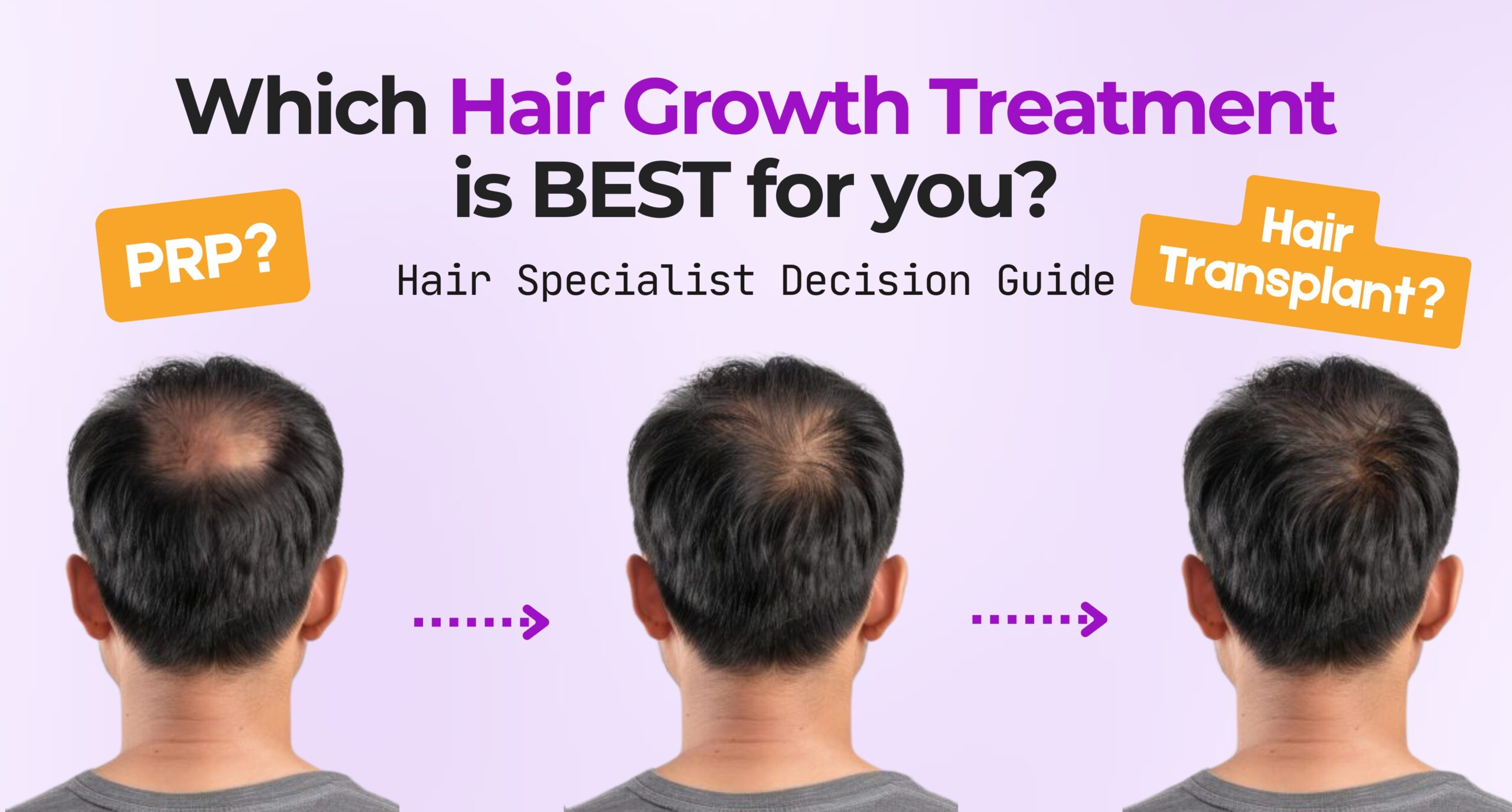
An Expert Trichologist’s Take to Help You Choose
Brief Summary (TL;DR)
Picking a hair regrowth option feels overwhelming – there are just too many out there now. But this article – which one’s actually best for YOU – based on scalp condition, pattern of hair loss and medical history. You’ll learn how hair specialists trained in trichology and clinical hair restoration assess hair fall stages and select treatments that match the severity and cause of hair loss.
Some fixes help early shedding; others kick in later. At CosmoLooks, hair experts do not rely on generic solutions they design custom hair regrowth plans that deliver consistent, visible results. You’ll finally get how to pick a solution that really fits your hair plus handles what’s bugging you.
Table of Contents
- Introduction
- Understanding Hair Loss Before Choosing a Treatment
- What’s the right hair regrowth fix for your needs? Top choices from trichologists
- Topical & Oral Medications
- PRP & Growth Factor Therapy
- Advanced Laser & LED Therapies
- How Trichologists Decide on the Best Hair Regrowth Treatment
- Lifestyle & Aftercare: The Secret to Better Outcomes
- Conclusion
- Frequently Asked Questions
Introduction
Hair getting thinner or falling out hits lots of people – men and women alike – sometimes much earlier than expected. Wondering what solution might work for your situation?
Start by realizing that hair loss is highly individual – what works for one person may not work for another.
The right hair regrowth fix for you hinges on how healthy your scalp is, what’s causing the shedding, yet also when you start tackling it .At CosmoLooks, hair specialists check every situation using scan images of your scalp, analysis of hair growth stages, or past health records – so they can lay out a plan that actually works.
Hair loss is not just a cosmetic concern – it impacts confidence, self-image, and daily interactions. Following a structured plan created by experienced hair professionals avoids random trial-and-error and leads to clearer, measurable progress.
Understanding Hair Loss Before Treatment Choices
Hair specialists first figure out what kind of hair loss it is and why it’s happening – so they skip guesswork, which means quicker results. Most folks assume every case of shedding is identical, yet reality shows at least 8 to 10 different medical types. Spotting the correct one early cuts down delays and spares emotional hassle.
Common Types of Hair Loss
Male pattern baldness – this type shows up as gradual hair loss, beginning at the temples or on top of the head. This issue pops up more than any other, so treatment with guidance from a trained hair specialist makes sense.
Telogen effluvium kicks in after stress, sickness, having a baby, or when hormones shift suddenly. It hits fast – can catch you off guard – but most people bounce back once they get care.
Alopecia areata means hair falls out in round spots because the body’s immune system attacks itself – so treatments must calm that reaction instead.
Hair gets thinner when your body lacks iron, zinc, or vitamin D – also if you’re not getting enough protein or folate.
Signs You Need Trichologist-Guided Treatment
- Sudden hair loss or way too much falling out
- Follicles show where strands thin out
- Widening parting line
- Thinning of ponytail
- Scalp inflammation or dandruff
- Prolonged drop lasting more than a month or so
Figuring out what’s really going wrong matters most – treatment should fit your situation, not the latest hype.
What’s the right hair regrowth fix for your needs?
Top choices from trichologists
Hair specialists often use combination-based treatment protocols that target follicles, scalp circulation, and growth cycles simultaneously. Use different treatments together – these hit multiple things at once, like hair roots, skin on your head or how fast hair grows. Next up, we’ll go into detail about every option, tossing in actual cases people have seen.
Topical & Oral Medications
These are commonly used as first-line support to slow hair fall and stabilize follicles.
1. Minoxidil (Topical)
- Extends the active growth (anagen) phase
- Improves blood flow to hair roots
- Available as foam, solution, or spray
- However your hair cant survive on minoxidil and it has mild side effects on long term usage , hence it is better to look at alternatives to minoxidil like stem cell therapy or low light LED therapy
Example:
A man in his early 30s noticed visible thickness improvement after consistent use of Minoxidil 5% for three months.
2. Nutritional Therapy
- Corrects iron, vitamin D, zinc or protein deficiencies
- Especially useful post-pregnancy or stress-related hair loss
These treatments create a strong foundation by reducing ongoing hair fall.
3. Plant Stem Cells –
Plant stem cell extracts can support hair health indirectly:
- Protect the scalp: Antioxidants help reduce damage from pollution, UV and irritation.
• Support follicles: A healthier scalp environment may help hair grow stronger.
• Improve hair thickness appearance: Some extracts strengthen the hair shaft, making hair look fuller.
- Reduce breakage: Stronger strands = less hair loss from snapping.
Examples often used:
• Apple stem cell extract – linked to scalp longevity support
• Edelweiss stem cell extract – antioxidant, soothing
• Grape stem cell extract – protective, anti-stress for scalp
PRP & Growth Factor Therapy
When topical care is not enough, advanced regenerative treatments help stimulate follicles.
1. PRP (Platelet-Rich Plasma)
- Uses your body’s platelets to activate dormant follicles
- Improves density and hair shaft thickness
- Effective for early-to-moderate thinning
2. GFC (Growth Factor Concentrate)
- An advanced, refined evolution of PRP
- Faster response and consistent outcomes in suitable candidates
Example:
A 35-year-old man experienced nearly 40% improvement in hair density after five GFC sessions, with visible crown coverage in six weeks.
Advanced Laser & LED Therapies
Ideal for individuals seeking non-invasive support treatments.
Low-Level Laser Therapy (LLLT)
- Enhances cellular energy production
- Improves scalp blood circulation
- Suitable for sensitive scalps
LED Red-Light Therapy
- Reduces inflammation
- Supports healing after PRP or GFC
- Prolongs the growth phase
These therapies significantly enhance the effectiveness of other treatments.
How Trichologists Decide on the Best Hair Regrowth Treatment
1. Scalp & Follicle Analysis
Digital trichoscopy evaluates:
- Follicle size and density
- Miniaturization levels
- Redness or scaling
- Sebum activity
2. Medical & Lifestyle History
Assessment includes:
- Stress levels
- Hormonal changes
- Pregnancy or PCOS
- Medication history
3. Treatment Mapping
- Early thinning → Minoxidil/ stem cell therapy
- Weak follicles → PRP / GFC
- Sensitive scalp → Laser / LED
- Genetic loss → Regenerative therapies
- Absorption boost → Microneedling
4. Combination Strategy
Using treatments together delivers better outcomes.
Minoxidil /stem cell therapy+ PRP + laser therapy can improve results by 50 – 60% compared to single-treatment approaches.
Lifestyle & Aftercare: The Secret to Better Outcomes
Hair-Friendly Habits
- High-protein diet
- Iron-rich foods
- Omega-3 intake
- Stress management
- Gentle scalp cleansing
- Avoid harsh shampoos and hot water
Medical Aftercare
- Consistent routine
- Timely PRP/GFC sessions
- Scalp exfoliation
- Sun protection for exposed scalp
Consistency outside the clinic plays a major role in long-term success.
Conclusion
Finding the right hair regrowth fix starts with expert hair evaluation, not guesswork. Whether hair loss is genetic, stress-related, or nutritional, CosmoLooks’ hair specialists design customized treatment plans that deliver visible, lasting results.
Regrow your hair using advanced technology, evidence-based care, and personalized protocols.
Book your consultation today at:
www.cosmolooks.in
Frequently Asked Questions
1. How do I know which hair regrowth treatment suits me?
A trained hair specialist evaluates your scalp, hair loss pattern, and medical history before recommending the right solution.
2. When will I see results?
Initial changes may appear within 6–12 weeks, with fuller results visible over 3–6 months.
3. Is PRP better than Minoxidil?
They work differently. Many cases benefit most when both are combined.
4. Are these treatments suitable for women?
Yes. Hair loss related to hormones, pregnancy, or PCOS requires tailored protocols, which CosmoLooks provides.5. Can hair grow back if follicles are completely gone?
Fully destroyed follicles cannot regrow, but miniaturized follicles often respond well to treatment.


No comment